As an 18 year old in Western Canada, I wasn’t around for the prime of Kate Bush and was not aware of her cultural impact. On December 2nd, 2018, I had the urge to listen to Hounds of Love, the fifth studio album of the odd English art-pop singer. I had read a little bit about her around the internet, but never thought much of sitting and listening to one of her albums. My music taste was always geared toward pop music and I thought her style may be a little bit too “rock” for me. Oh, I was so very wrong.
On a snowy day, I popped in my headphones like usual on my way to University. Trudging through deep snow on my way to the bus stop, I heard “Running Up That Hill (A Deal With God)” for the first time. I was completely entranced in the pulsating beat and weird synth sounds along with Kate’s powerful vocals. On my hour long bus and train commute to class, I heard the entirety of “Hounds of Love” and “The Ninth Wave” for the first time. It was the strangest, most unique record I had ever heard up until that point. It was an odd but brilliant mix of art-pop and soft rock and I found it to be the most creative album I had ever heard.
I was thoroughly impressed when I realized that she had produced and written the album (along with the majority of her other work) completely by herself. I played Hounds of Love on repeat for several days as I went about my usual day and completely lost myself in the concept of “The Ninth Wave”, fascinated by the story of the woman lost at sea, stuck between life and death. A few days after, I searched her name on YouTube and watched the music video for “Wuthering Heights”, completely entranced by her vocals and the complete oddness of it all. As I watched that video for the first time, I felt a connection to the music unlike anything I had heard before. In that moment, my love for Kate Bush began.
I dove into her discography and began listening to her albums one by one, falling in love with each. There was just something so different and otherworldly about her; I had to hear more. In my first post on my first music review blog, I will be reviewing and ranking the discography of Kate Bush. Of course, each is excellent in their own way and this list is based on my personal preference and connection to the music.
10) Director’s Cut (2011)

The second newest album in Kate’s discography, released in 2011, is a collection of reworked songs from her earlier albums “The Sensual World” and “The Red Shoes”. It stands at the bottom of my list not because it is awful, but because I don’t feel like it was necessary. In my opinion, I prefer all of the original versions of the reworked songs more. I don’t prefer any of the songs on this album to their originals; they feel weaker in quality to their original. Her voice doesn’t sound as powerful or inspired compared to the rest of her work. Some lows on the album include “Deeper Understanding”, which pales in comparison to the original. The reworked version of “Rubberband Girl” is miles behind the original and Kate’s vocals sound very muffled and uninspired. However, the album isn’t completely hopeless, with some highs including “Song of Solomon”. I love her angry, no-holds-barred vocals in the chorus, almost shouting the chorus. “And So Is Love” is another high point, very similar to the haunting original, with some excellent vocals from Kate. Overall, I don’t find myself going back to this album much willingly, as I prefer the original versions.
9) 50 Words for Snow (2011)
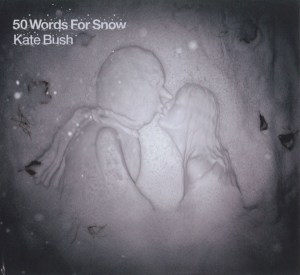
The newest album in Kate’s discography is a concept piece revolving around winter. With an hour and five minute running time and only 7 songs, the shortest 6 minutes and longest 13, the album is not as accessible as the rest of Kate’s work. This is not to say it isn’t as ethereal or excellent as the rest of her work, as each of the songs are beautiful and wonderfully crafted in their own way. The songs are long, stretched out stories with poetic lyrics, but do not contain the catchy hooks and choruses of her previous work. As I live in Canada with extremely cold weather and snow, I am sure that I will connect with this album sometime later in my life, but that time is not now. It feels like an adult contemporary album that I’ll be playing in my thirties during a snowfall.
A low point on the record for me is “Misty”, which seems a bit too long and unmemorable at 13 minutes long. As I said, my opinions will probably change over time, so I will keep an open mind when I go back to listen.
There are some wonderful high points on the record, including the opener “Snowflake”, featuring Kate’s son. Their vocals sound magical together as the lyrics tell a beautiful story of a snowflake falling to earth. “Lake Tahoe” is another standout, with Kate using high-pitched male vocals to contrast her own. The lyrics tell a story of the ghost of a woman who has fallen into a lake. The track is incredibly haunting and makes a beautiful song to listen to on a snowy day. “Wild Man” is another highlight, with a hauntingly beautiful chorus and entertaining story, based around the Yeti. Overall, “50 Words For Snow” is an ambient and atmospheric record that wonderfully expresses the theme of winter, snow and cold.
8) Lionheart (1978)
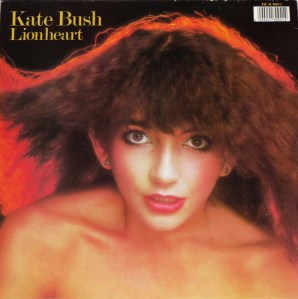
Kate’s second album, released nine months after her debut, is an enchanting record that leans more into baroque-pop territory than her previous work. “Lionheart” offers a variety of well-written songs with uncommon subject matter.
There are various high points on the album, including “Wow”, a song about a gay actor. The hit single includes an incredibly euphoric chorus, showcasing the intense and enchanting powerhouse vocals of Kate. “Kashka From Baghdad” revolves around a gay male couple forced to keep their relationship secret. Kate delivers expressive, dramatic vocals that only further bring her poetic lyrics to life. “Coffee Homeground” regards someone who is afraid of being poisoned, communicated through Kate in an exaggerated accent and “Hammer Horror” details an actor being haunted by the dead actor he has replaced in a stage performance. “Hammer Horror” is a unique song with delicate verses and an exploding, jarring chorus. Throughout the album, Kate delivers exquisite vocals and peculiar, poetic songs with bizarre subject matter.
The album has few lows, although songs that have not connected with me as much include “Don’t Push Your Foot On the Heartbrake” and “In The Warm Room”. Overall, the album is an enchanting experience that showcases the versatility of Kate’s songwriting and vocals. The last album released before Kate began to produce her work by herself, “Lionheart” provides a taste of the experimentation that was ahead.
7) The Red Shoes (1993)

The final album released before Kate’s 12 year hiatus, 1993’s “The Red Shoes” treads more heavily into art-rock territory, detailed with explosive choruses and loud, passionate vocals. Accompanied with a campy 40 minute musical film based around the title track’s concept, Kate delivers a variety of genres and instrumentation to bring “The Red Shoes” to life.
High points on the record include the opening “Rubberband Girl”, which is driven by loud guitars and a kick-snare beat. Kate’s vocals are sharp and determined as she longs for the ability to quickly bounce back from bad situations, like a rubber band. “And So Is Love” is a haunting, melancholy track about the inevitable sadness that comes along with life. The track offers a cynical perception toward life as Kate sings “Now we see that life is sad, and so is love”. The third track, “Eat The Music” is a celebration of music, with an addictive chorus and a joyful, sunny atmosphere. “Moments of Pleasure” is a beautifully written track about treasuring the joy that comes along with life. Kate sings, “Just being alive, it can really hurt and these moments given are a gift from time.” The excellent run of songs on the first half of the album continues with “The Song of Solomon”, featuring an ethereal chorus stating “Don’t want your bullshit, just want your sexuality.” The next two tracks, “Lily” and “The Red Shoes” are addictive tracks with loud, powerful vocals with wonderfully written concepts.
Personally, the album drops in quality after the first seven tracks, with beautiful but not as memorable tracks. There is absolutely nothing wrong with these tracks, they just stand in the shadow of the excellent first half. Overall, “The Red Shoes” holds its own among Kate’s discography, but it is definitely not her best.
6) Aerial (2005)

2005’s “Aerial”, the first album released after Kate’s 12 year hiatus, is a behemoth of an album. At 1 hour and 20 minutes, the record is split into two parts; “A Sea of Honey” and “A Sky of Honey”. The first half, “A Sea of Honey”, is clearly the weaker side in comparison but is still an enjoyable, atmospheric listen.
The album opens with a bang; single “King Of The Mountain” sets the mellow, low-key nature of the first half. Kate’s vocals shine throughout the song as she wonders about the whereabouts of Elvis, centered around the rumors of his possible mortality. The contrast of the soft beats and guitar successfully offers a taste of what is to come later. “Joanni” is another highlight of the first half, inspired by Joan of Arc. This track offers a slow, entrancing beat with a catchy, extremely singable chorus.
The tracks on the first side are beautifully arranged, written and produced but has its own low point with “Mrs. Bartolozzi”. The track is slow and piano-driven, but does not stand out like the other songs. Overall, “A Sea of Honey” is beautifully produced and serves as somewhat of a prelude to the real star of the album: “A Sky of Honey”.
“A Sky of Honey” is 42 minutes long, comprised of 9 tracks that ultimately flow together as one track. It is a concept album about the idea of time, the entire suite taking place in a single day. Throughout each track on this side, Kate proves that she still holds the ethereal magic present in her earlier work. All 42 minutes of this side serve as a high point, not only of Aerial, but of her entire career.
The opening tracks “Prelude” and “Prologue” introduce the listener to a calm, sunny afternoon in England. Accompanied by birdsong and soft piano, Kate successfully depicts the atmosphere of a hot summer day. In “Prologue”, Kate sings ‘It’s gonna be so good now, it’s gonna be so good”, offering an optimistic view of life unlike some of her past work.
The album continues with “An Architect’s Dream”, detailing a painter creating his art on a sidewalk. The soft, throbbing drum beat puts the listener into a trance, fully enveloping one in the world of the story. “The Painter’s Link” follows, a turning point in the suite. The melancholy interlude continues the story of the painter, whose painting has been washed away by the rain.
This track flows into “Sunset”, a somber and relaxed track based around the time of day when the sun begins to go down. The song, based heavily around the piano, continues to successfully bridge together the story of the concept suite. “Aerial Tal”, a short interlude comprised of only bird song features Kate’s imitation of birdsong and a cheerful piano. Cleverly disguised in the birdsong, the names of the suites “A Sea of Honey” and “A Sky of Honey” are repeated near the end of the track.
“Somewhere In Between” takes place during twilight, between the day and night. Like the rest of the tracks, the song provides a tranquil and euphoric atmosphere, intensified by Kate’s vocals.
The final two songs on the album are my personal favorites and provide a triumphant ending to the concept suite. “Nocturn” stands at 8 minutes long and takes place within a body of water during nighttime, accompanied by a lover. It is unclear whether the song is a dream sequence or not, but either way the euphoria of the song is highlighted by lyrics like “The stars are caught in our hair, the stars are on our fingers, a veil of diamond dust”. In its last 2 minutes, the track offers a cathartic breakdown and outro powered by Kate’s intense vocals. Multiple layers of voices sing out the final lyrics, ending abruptly with the line “All the time it’s a changing, and all the dreamers are waking!”
This leads into the final track, “Aerial”, clocking in at just under 8 minutes. “Aerial” takes place at the beginning of a new day, completing the concept of “A Sky of Honey”. The song is driven by the feeling of release and catharsis as Kate sings “I wanna be up on the roof, high on the roof”. Within, there is a 2 minute stretch of simply Kate laughing hysterically along with twittering birdsong. This further communicates the feeling of release that closes the album and concludes the concept of a day’s cycle. The ending entices the listener to start over from the beginning to experience this sense of catharsis again. Overall, “A Sky of Honey” is masterfully crafted and will always stand as a highlight in Kate’s discography for me.
5) The Kick Inside (1978)
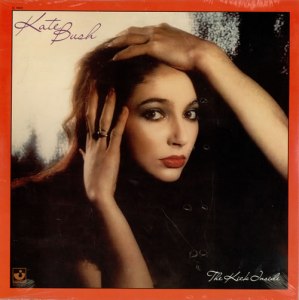
Kate’s debut, “The Kick Inside” stands as an important staple in her discography. The second album of hers I had ever listened to, the album provides a look into the quirky, odd voice and musical style of Kate. Written entirely by herself, some songs from the record were written when she was as young as 13 years old. Despite only being 19 at the time of its release, Kate offers a unique maturity and poetic lyrics beyond her years.
There are many highs in this album, including opener “Moving”, an absolutely stunning song written for her dance teacher, Lindsay Kemp. The song begins and ends with whale song, as if inviting the listener into her world of weirdness. Kate’s delivery of lyrics “You crush the lily in my soul” is transcendent. “Strange Phenomena” is a theatrical ode to many of Earth and life’s phenomenas. The lyrics are philosophical and the song offers an explosive and addicting chorus backed with a piano. “The Man With the Child In His Eyes” is a wonderful piano-driven ballad, highlighting Kate’s beautiful voice. Of course, “Wuthering Heights” is the centerpiece of the album and personally my second favorite Kate song of all time. Kate’s dramatic, high vocals and otherworldly production make it sound incredibly unique, as if music from another planet. The chorus takes you to another plane of existence, enchanting you like a spell. Kate sings, “Heathcliff, it’s me Cathy! Come home, I’m so cold! Let me in your window!” This was the track that immediately turned me into a fan and I realized that Kate Bush was something special.
Her vocals shine on “Feel It”, a romantic song with intense emotion behind it. “Oh To Be In Love” is an infectious track with excellent lyrics and another example of Kate’s piano skills. “Them Heavy People” is a captivating track with the unforgettable refrain “Rolling the ball, rolling the ball to me”.
The penultimate track, “Room For the Life” is a celebration of femininity and womanhood, with a gratifying chorus and powerful vocals. The final track and title track, “The Kick Inside” is a song about a woman who becomes pregnant with her brother’s child. Haunting production and vocals communicate the somber subject matter, ending with the presumed suicide of the sister.
The album isn’t completely perfect, with more forgettable songs like “The Saxophone Song” and “James and the Cold Gun”. Despite its lows, Kate’s debut is a dazzling example of her talent, showcasing her songwriting skills and infectious melodies. Overall, “The Kick Inside” stands the test of time and demonstrates the oddness of Kate’s music, a prelude for what was to later come.
4) Never for Ever (1980)
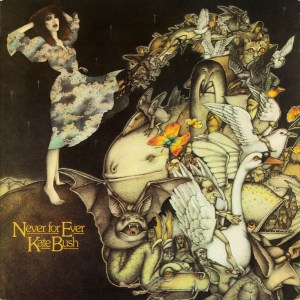
Kate’s 1980 masterpiece “Never for Ever” marks her first venture into production territory, co-producing every single song for the first time. The album leans more heavily into baroque-pop territory than her previous work and utilizes the fairlight synthesizer that became a staple in her later work.
“Babooshka”, one of Kate’s most successful songs, opens the album explosively, with a roaring and emotionally-charged chorus. The song tells the story of a woman who suspects her husband to be unfaithful and creates an alter-ego to trick him into cheating on her. During the chorus Kate yells with powerful vocals “All yours! Babooshka, babooshka!” This song is an absolute classic and one of Kate’s best, with excellent storytelling, production and vocals.
“Delius” immediately follows, a song based upon the composer of the same name. The track features soft, strange vocals along with addicting production that enchants the listener, putting them into a trance. The song sounds like a spell, a mellow melody that begs to be played over and over.
“Blow Away (For Bill)” follows, a magnificent track dedicated to Bill Duffield, a lighting technician who unfortunately died on the first date of Kate’s first concert tour. The track is atmospheric and gentle, with sweet-sounding vocals and soft production. The chorus is sung in a high pitch, listing off names of deceased musicians. Once again, Kate creates a song that captivates the listener, entrancing them in a spell.
“All We Ever Look For” comes next, featuring sharp and whistle-like sounds. The lyrics address family relationships and are communicated through magical and otherworldly vocals. “Egypt” is an ode to the country of the same name, with dazzling vocals and hypnotizing production. “The Wedding List” leans more into alternative rock, telling the story of a widowed woman who sets out to avenge her husband’s death. The track is dark and ominous, contrasted with cheerful and upbeat production. Kate’s voice is as expressive as ever, communicating the story in a powerful and dramatic manner.
Up next comes “Violin”, arguably the weakest track on the album. It serves as an ode to the instrument accompanied by screeching vocals. Kate’s voice is frantic and out of control, with theatrical production and vocals. “The Infant Kiss” is a tranquil and quiet track with bizarre subject matter, regarding a woman who feels the spirit of a grown man within a young child. This flows into “Night Scented Stock”, a soft 52-second interlude including only Kate’s harmonizing voice.
The final two tracks serve as a grand, artistic ending to the album, beginning with “Army Dreamers”. With lush production, Kate addresses the effects of war upon a mother who loses her son in battle. Kate ponders upon the route the soldier’s life could have taken, singing, “What could he do? Should have been a rockstar, but he didn’t have the money for a guitar. What could he do? Should have been a politician, but he never had a proper education.” The track is impactful and genius, successfully demonstrating the complicated nature of war.
The closing song, “Breathing”, is arguably one of the best in Kate’s discography. Written from the perspective of a fetus during a nuclear fallout, the track is haunting and clever, with lyrics such as “Outside gets inside, through her skin. I’ve been out before, but this time it’s much safer in.” The track’s subject matter is dark and is further emphasized by a spoken bridge that details the effects of nuclear bombs. In the explosive final minute, the production becomes frantic and loud with a chorus of voices screaming: “What are we going to do? We are all going to die.” The delivery sends shivers down the listener’s spine as we imagine ourselves in this situation, pondering the possible event of a nuclear blast. The track is still extremely prominent today and remains one of the most well-written songs in Kate’s career. Overall, “Never for Ever” is essential in Kate’s discography, serving as a bridge between her earlier work and the self-driven, experimental work that came next.
3) The Sensual World (1989)
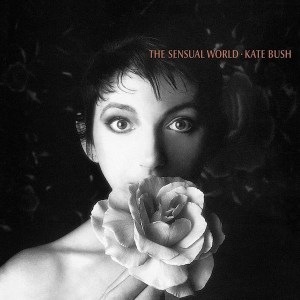
1989’s “The Sensual World” opens with its title track, prefaced by fifteen seconds of bells chiming. The bells signify the beginning of a celebration, an ode to nature and the world itself. Kate exclaims, “Mmh, yes!” after every line, overcome by the beauty of the material world. Inspired by James Joyce’s novel, “Ulysses”, Kate sings from the perspective of character Molly Bloom as she steps from pages of black and white into the three dimensional real world. The lyrics are obscure and poetic, with an ethereal chorus accompanied by Irish uilleann pipes. Kate sings, “Stepping out of the page, into the sensual world”, pulling the listener into her experimental and elegant world of music.
The second track, “Love and Anger” remains a high point among her entire discography, with soft verses detailing a buried, hidden secret. The mellow verses only make the loud guitar in the chorus even more striking as Kate sings “Take away the love and the anger, and a little piece of hope holding us together”. The chorus is euphoric and memorable, a beautiful example of Kate’s vocal and production skills. David Gilmour of Pink Floyd contributes a wonderful guitar solo to the track as a chorus of voices lifts the song into an even more euphoric experience, singing, “You might not think so now, but just you wait and see, someone will come to help you”. The track is an uplifting anthem that promises hope in the face of adversity.
The third track, “The Fog” marks an artistic turn in the album as the tempo slows down and Kate sings of growing older, including a spoken appearance from her father. Kate sings, “If I let you go, you’ll slip into the fog” and a high-pitched screeching of strings takes over, enveloping the listener like a fog. The track is very atmospheric and sullen, a delightful poem regarding the pain and uncertainty of leaving youth behind.
“Reaching Out” is next, another euphoric track that is dedicated to Kate’s mother. A soft piano accompanies Kate’s voice in the verse before a choir of piercing voices pulls the listener further into her world of sound. The chorus is explosive, with Kate singing “Reaching out for the star, reaching out for the star that explodes, reaching out for mama.” The imagery, combined with Kate’s powerful and emotional vocal delivery create an emotionally charged and cutting track.
The next track, “Heads We’re Dancing”, is a dark track with an infectious beat, growing more intense with each second. The lyrics are a fictional story of a woman who is seduced by a stranger, only to find days later that the man was Hitler. The strange and controversial subject matter could have gone horribly wrong, but Kate is able to keep it tasteful and away from offensive territory. The hard-hitting beat and clever lyrics pull the listener into the shoes of the character, filled with confusion, hatred and regret.
“Deeper Understanding”, the sixth track, regards a lonely person who forms an emotional attachment to their computer. Released in 1989, the song still remains prominent, especially in today’s society within the age the internet and social media. Kate features a Bulgarian vocal ensemble, Trio Bulgarka, within the chorus, creating an otherworldly effect as the computer speaks to the protagonist. “Hello, I know that you’re unhappy. I bring you love and deeper understanding” the eerie, alien voices sing. The song is incredibly intelligent, especially in hindsight, as Kate quite literally predicts the current state of our world.
“Between A Man and A Woman” is arguably the weakest song on the album, but is still enjoyable with a groovy beat and a screeching, powerful vocal performance from Kate.
“Never Be Mine” is a melancholy track, based upon the familiar feeling of unrequited love. The chorus is explosive, with Kate once again featuring the Trio Bulgarka on backing vocals. “This is where I want to be, but I know that this will never be mine” Kate sings, the pain and longing in her voice abundantly clear. Her desire for something that she can never have is effectively communicated throughout the song, with the vocals of Trio Bulgarka only elevating the euphoria.
The trio make their greatest appearance on the ninth track, “Rocket’s Tail”, sounding like an ethereal chorus of angels within the verses and pre-chorus. Kate’s vocals powerfully compliment the trio, creating an exhilarating musical experience. “And dressed as a rocket on Waterloo Bridge, nobody seems to see me. Then with the fuse in my hand, and now shooting into the night” Kate sings right before an explosion of loud guitar, signifying the character’s journey flying into the night sky. The imagery is extremely powerful, creating an image of someone dressed as a rocket, shooting into the sky. Wailing production wraps around the listener, taking them along on the short-lived journey to the stars. The track is extremely euphoric and enjoyable and ranks high among my favorite Kate songs of all time.
“This Woman’s Work” is the emotional penultimate track, written from the perspective of a man whose wife is having complications during childbirth. It sounds sad and hopeless as the man has no choice but to sit and wait, thinking of their life together and things he could have done differently. There is a hopeful undertone to the song as Kate sings, “I know you have a little life in you yet, I know you have a lot of strength left”. One of Kate’s most emotionally powerful songs, the song ends with a pleading “Oh darling, make it go away. Just make it go away now.” The ending track on some editions, “This Woman’s Work” ends with an emotional uncertainty, with the slightest pinch of hope.
On the CD and cassette versions of the album, a bonus track “Walk Straight Down The Middle” closes the album and offers a more hopeful conclusion. The production is lush and glittery, with beautiful synths accompanying Kate as she sings, “He thought he was gonna die, but he didn’t. She thought she just couldn’t cope, but she did. We thought it would be so hard but it wasn’t. It wasn’t easy, though.” The track is a striking and fitting end to a powerful album that remains ahead of its time to this day. Overall, “The Sensual World” is a sensational album and personally one of my favorites. The production and vocals transport you to the very sensual world that Kate describes in the title track, grabbing and keeping the listener’s attention for the entirety of its 46 minute runtime.
2) The Dreaming (1982)
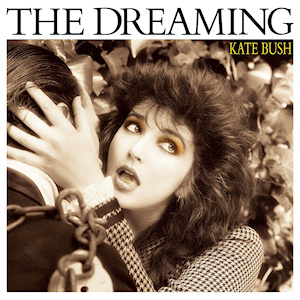
Widely regarded as Kate’s most experimental and avant-garde release, 1982’s “The Dreaming” presents 10 otherworldly songs that sound unlike anything ever created. The album marks the first in which Kate took full creative control, writing and producing the entire album by herself. She takes loud, experimental risks that set the album apart from the rest of her discography. Kate establishes her artistic freedom and independence, holding absolutely nothing back. On first listen, the work is jarring and unconventional, requiring several listens to unpack and digest the lyrics and unique songs.
The album begins with startling heavy drum beats, introducing the lead single “Sat In Your Lap”. The production is heavily layered and complex, paired with philosophical lyrics that explore the theme of knowledge. Kate screams the chorus with intense conviction, “Some say that knowledge is something sat in your lap, some say that knowledge is something that you never have.” The transcendent lyrics are heavily emphasized by Kate’s vocal manipulation as she loudly sings the post-chorus, “I must admit, just when I think I’m king, I just begin.” The track soars through different levels of loudness and instrumentation, which may be off-putting on the first listen. As it reaches the final lines, a chorus of deep, layered vocals reach a crescendo, yelling: “Across the desert, across the weather, across the elements, across the water!”
The second track, “There Goes A Tenner” picks up immediately, with a simple piano backdrop and Kate’s vocals forming an exaggerated cockney accent. The song is written from the perspective of a frightened character who has become involved in a heist of some sort. The instrumentals make the track sound comical and theatrical, despite the heavy subject matter. The story is told in chronological order through the verses and chorus, from the planning of the heist to the minute it goes wrong, landing the protagonist in prison. Kate sings, “You blow the safe up, then all I know is I wake up, covered in rubble. One of the rabble needs mummy, the government will never find the money.”, insinuating that the group in fact were successful in their heist. The outro finds the character daydreaming of better days before the incident singing, “Ooh, there goes a tenner! Hey look, there’s a fiver! There’s a ten-shilling note. Remember them? That’s when we used to vote for him.”
The next track pulls the listener into a new story, this time written from the perspective of a Vietnamese soldier fighting against the United States troops. “Pull Out The Pin” creates a tribal, jungle-esque atmosphere with peculiar noises that create the feeling of uncertainty and danger. Backing vocals provided by David Gilmour sing “I’m pulling on the pin, pulling on the pin, woah”, further pulling the listener into the perspective of the soldier. The chorus provides commentary on war and what it ultimately comes down to: survival. “Just one thing in it, me or him, and I love life! So I pull out the pin.” Kate screams these lyrics with loud enthusiasm, as though she is literally on the front lines of a battle. The lines sound like a battle cry, grating on the first listen but very rewarding as you get used to it.
The next track, “Suspended in Gaffa”, begins with a cheerful piano and melodramatic vocals that come along with multiple layers of meaning and possible interpretation. The meaning behind the song’s verses are obscure for me personally, although many interpretations exist on the internet. Overall, the track is meant to be about seeing something you desire but are unable to experience again. Kate sings in a quiet voice before the exploding chorus, “I caught a glimpse of a God, all shining and bright.” The chorus is dramatic and grand as she sings “Suddenly my feet are made of mud, it all goes slow-mo. I don’t know why I’m crying. Am I suspended in gaffa?” The title lyrics are thought to be about gaffer tape, used in theater and film production. Kate is stating that she is in a period in which she feels stuck, unable to move forward. With high, exceptional vocals she screams, “Not until I’m ready for you” and “I want it all”, regarding the natural human tendency to desire more than what we have. The track draws to a close with a question, “Can I have it all now?”, tying together the thematic and philosophical element of the track.
The middle track, “Leave It Open”, is based around a loud drum beat and synthesized, manipulated vocals throughout the verses. The lyrics are about letting the weird side to one’s personality become free and shown. She addresses the duality of humanity stating “Harm is in us, but power to arm.” At the 2 minute mark, the track explodes into a frenzy of hard-hitting drum beats and high-pitched, almost scary, vocals. The outro contains a clever lyric that seems to tie up the theme of the song and Kate’s music as a whole, “We let the weirdness in.” With Kate’s music, our minds are opened further to the wild and experimental side of music that may be looked down upon by others. This lyric is representative of the entirety of Kate’s work and the people that listen and feel a connection to it.
The title track, “The Dreaming” begins the next side of the album with experimental production and out-there lyrics. In an Australian accent, Kate tells the story of the Aboriginal peoples of Australia, whose land and culture were negatively effected by the arrival of the white man. The mistreatment of the Aboriginal people is communicated through the lyric, “Erase the race that claim the place and say we dig for ore, or dangle devils in a bottle and push them from the pull of the Bush.” The chorus is arguably the best part of the song, with a chorus of voices spelling out the word “Dreamtime”, a common Aboriginal belief regarding the time before Earth came to form. Kate’s delivery of these lines and subject matter not only create a wonderful song, but educates the listener about the cultural assimilation experienced by the Aboriginal peoples. The production sounds Earthy and natural, complete with sounds of animals hidden within the chorus.
“Night Of The Swallow” comes next, telling the story of a pilot who is asked to assist a group of escaped prisoners. Told from the perspective of the pilot and their partner, the latter pleads to them “I won’t let you do it, I won’t let you go through with it.” The chorus is extremely intense and startling, with excellent use of the Irish uillean pipes. Over the overwhelming instrumental Kate sings, “Tonight’s the night of the flight, before you know, I’ll be over the water like a swallow.” The pilot begs for their partner to let them go, pleading with intensity: “Give me a break! Let me try! Give me something to show for my miserable life!” and high vocals scream, “Let me go!”. The ending of the story is uncertain as the track becomes quiet and ends with the lyrics: “But you’re not a swallow.”
The next track, “All The Love”, is probably the most conventional song on the album, based around piano and a less intense vocal performance from Kate. The lyrics regard the idea of how tragedy leads to the communication of feelings that aren’t usually shown. The song encourages the listener to express their true feelings before it is too late, singing, “All the love, all the love you should have given.” As the track reaches its conclusion, Kate adds a series of twenty real voicemail messages saying different versions of “Goodbye”. It adds a layer of gloom and mystery to the track as a high male voice ends the song with “We needed you to love us, too. We wait for your move.”
The next track, “Houdini”, is a story told from the perspective of Houdini’s wife as she attempts to communicate with him after death. With an established secret code, “Rosabel believe”, the wife of Houdini realizes that she is in fact communicating with his ghost. The song’s arrangement is absolutely beautiful with a euphoric chorus, “With a kiss, I’d pass the key and feel your tongue teasing and receiving.” The sweet vocals turn dark and fearful shortly after as Kate yells “With your spit still on my lip, you hit the water!” The track is intense and magical, with some of the imagery depicted on the album cover as Kate passes a key to Houdini with her mouth. Complete with short, quiet interludes, the lyrics are highlighted and the unique production is given an opportunity to breathe.
The final track, “Get Out Of My House” is the most intense and unusual song from Kate’s discography, in my personal opinion. Beginning with a vigorous guitar refrain and the imitation of a mule braying, the track immediately pulls the listener into its odd and frightening story. Kate compares her body and mind to a house, denying access to a man who has broken her heart. She closes herself off from any kind of contact, singing in a muffled voice before the chorus, “I’m the concierge, chez-moi honey. Won’t let you in for love, nor money. My home, my joy, I’m barred and bolted.” The chorus is violent as Kate screams, “Get out of my house! No strangers feet will enter me! I wash the panes, I clean the stains!” Kate’s vocal performance on this song is unlike any other, full of fury, anger and fear. The yelling is startling, but becomes less jarring with each listen. As the track nears its end, the guitar refrain from the beginning returns and a male voice sings “Woman let me in, let me bring in the memories! Woman let me in, let me bring in the devil dreams!” to which Kate responds, “I will not let you in! Don’t you bring back the reveries! I turn into a bird, carry further than the word is heard.” Her male counterpart begs and barters to be let back into her house, but Kate makes it clear that she has made up her mind. She sings, “I will not let you in. I face towards the wind, I change into the mule.” This line is followed by repetitive donkey noises yelling “HEE-HAW, HEE-HAW!” over and over. One of the strangest moments in her entire discography, Kate uniquely communicates that she has become as stubborn as a mule and she will not change her mind. The loud braying brings the album to a close, a fitting end to a fantastical, unconventional record.
Overall, “The Dreaming” rings in second within her discography for me and remains one of my favorite albums of all time. The complete absurdity and strange subject matter of the tracks always make it an interesting, rewarding listen.
1) Hounds of Love (1985)
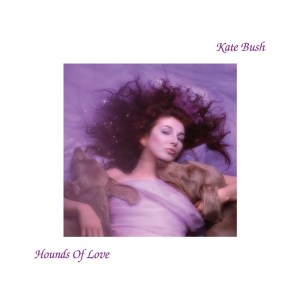
Of course, the 1985 album “Hounds of Love” takes its place at the top of my list as my favorite Kate Bush record. I regard this album as the centerpiece of her discography, a wonderful blend of art-pop, soft rock and experimental music. The first Kate record I ever listened to, this album immediately drew me into her magical, musical world and proves to become more rewarding with each listen.
The first track, “Running Up That Hill (A Deal With God)” introduces the listener into her world with a stomping beat and mesmerizing synth sound effects. “It doesn’t hurt me. Do you want to feel how it feels?” she begins, immediately pulling us into her unique universe with her powerful vocals. She sings of longing to make a deal with God to trade places with her partner, gaining the ability to see things from their perspective. The chorus can be interpreted as a longing to see things from anybody’s place in order to fully understand them. She believes that her life would be easier, living as the other person. “I’d be running up that road, be running up that hill, with no problems.” The song comes to a crescendo during the bridge as Kate yells “Come on darling, let’s exchange the experience!” followed by a thunderous wave of sound that washes over the listener. Overall, the track stands at the top of her discography for me.
The title track, “Hounds of Love” comes next, beginning with an abrupt voice clip of a man yelling “It’s in the trees! It’s coming!”. With a thudding drum beat and beautiful strings, Kate speaks of her experience running away from love. “I’ve always been a coward and never know what’s good for me” she admits before the chorus explodes. The strings, while listening on headphones, move from ear to ear and create a completely wonderful musical experience. “Oh here I go! It’s coming for me through the trees!” she yells, as the strings become more and more frantic. The slight feeling of panic arises in the listener as Kate runs from love, personified as a pack of hounds. “Take my shoes off and throw them in the lake!” Kate sings with abandonment, creating a sense of freedom or surrender. As the song draws to a close, she admits “Do you know what I really need? I need love.” The song is short, intense and effective. Kate successfully creates a brilliant song upon something almost everyone can relate to; being afraid to love or be loved.
The next song, “The Big Sky” is a celebration of life. It’s dedicated to the dreamers, the ones that have their head in the clouds. “I’m looking at the big sky now” she sings, “You never understood me, you never really tried.” The instrumentation is upbeat and carefree, creating the sense of freedom and letting go. “That cloud! It looks like Ireland!” she sings. Kate presents the feeling of looking up into the clouds and losing yourself as you watch them change. This track is pure happiness and carefree energy. It grows louder as it concludes, with a chorus of voices singing “Rolling over like a great big cloud, walking out in the big sky!” as it gradually fades to silence.
In contrast, the fourth track, “Mother Stands For Comfort”, is a dark and intense track. Beginning with the sound of breaking glass, the song breaks into a beat of cold synths as Kate sings, “She knows that I’ve been doing something wrong, but she won’t say anything.” From the perspective of a murderer, Kate communicates the power of a mother’s love. Despite the atrocities their child may have committed, their love for them will always win over. “Mother stands for comfort. Mother will hide the murderer” Kate sings, “To her the hunted, not the hunter.” The production is creepy, with sharp, whining synths and the lyrics give the song an eerie vibe. “Mother hides the madman. Mother will stay mum” the character knowing that they will always have the love of their mother.
The next track is more cheerful, introduced with strings and a high, energetic melody. “Cloudbusting” is written from the perspective of the son of scientist, Wilhelm Reich. Reich developed a device called a “cloudbuster” that could produce rain. The government destroyed all of his research, inspiring some verses in the song. Kate sings, “Cause every time it rains, you’re here in my head, like the sun coming out” as the protagonist recalls memories of his father. The song carries a joyful and hopeful tone as Kate says, “I just know that something good is going to happen.” During the bridge and outro, a wave of layered vocals harmonize along to the strings, creating an atmosphere of happiness. The track ends with a train whistle, bringing a close to the first side of the album.
Now, this album is split into two sides. The second side, “The Ninth Wave” is a stunning, abstract concept piece that tells the story of a woman in the aftermath of a shipwreck. She is stuck floating in the ocean alone, with a life jacket and a blinking light attached to it so she can be seen.
The first track, “And Dream of Sheep” begins the story. Based around only a soft piano, Kate creates a feeling of isolation. “Little light, shining. Little light will guide them to me” she sings. The character longs only to sleep, but knows that if she does she will likely die. Kate sings,”Let me be weak, let me sleep and dream of sheep.” She longs for comfort or a distraction, singing “I can’t keep my eyes open, wish I had my radio. I can’t be left to my imagination.” The character is afraid of their own subconscious and what lies within. She begins to fade into unconsciousness, “They smell like sleep. They say they take me home, like poppies heavy with seed. They take me deeper and deeper.”
This fades into the next track, “Under Ice” which is a dream sequence/hallucination of the protagonist. Jarring strings create the image of skates gliding upon ice as she skates across a frozen lake. “The river has frozen over. Not a soul on the ice, only me skating” she sings, once again creating the sense of isolation. The entire song is based upon the beautiful jolting strings, providing a cold and lonely atmosphere. This dream slowly turns into a nightmare as she sings, “There’s something moving under the ice, trying to get out of the cold water”. This creepy imagery becomes even more frightening when the protagonist realizes that it’s her that is stuck under the ice. “IT’S ME!” she screams in fear as the strings stop and the song slows to silence.
“Waking The Witch” begins with only a piano and a series of different voices saying “Wake up!” The first minute is ambient as the protagonist hallucinates different people in her life talking to her, urging her to wake. Suddenly, a series of sharp and scary noises erupt as a stuttering voice yells “Listen to me, baby. Help me, baby. Talk to me, please talk to me!” We are thrown into the protagonist’s nightmare as she imagines herself as a witch being persecuted. “You won’t burn, you won’t bleed, confess to me girl!” a garbled, low pitch voice (actually Kate’s) says. She sings “Red, red roses, pinks and posies” along with the growling voice and softly sings a prayer to both God and the Devil to help her out of her situation. The protagonist hallucinates herself being thrown into the sea with a stone tied around her legs singing, “This blackbird! There’s a stone around my leg.” The demonic voice of the persecutor yells “She’s a witch! Damn you, woman!” as the protagonist maintains her innocence. The chaotic track draws to a close with the persecutor ordering, “Wake the witch” and the sound of a helicopter. Distant voices yell “Get out of the waves! Get out of the water!” as the track, and the protagonist’s nightmare, ends.
In the next track, “Watching You Without Me”, the character astral projects out of her body and appears as a ghost in her own house. She stands, soaking wet, watching her family go about their day without her. The thudding beat creates the effect of a clock ticking as Kate sings, “You watch the clock move the slow hand. I should have been home hours ago.” She attempts to talk to her family and tell them about what is happened to her, but she is only a ghost and they cannot hear her. “You can’t hear me, you can’t hear me” she repeats in a low, muffled voice. The track creates the feeling of complete hopelessness and being completely out of control. “Don’t ignore me, don’t ignore me!” Kate pleads in the bridge, her voice desperate and fearful. As the song reaches its conclusion, the jarring voice yelling “Help me, baby! Talk to me, listen to me!”, sampled from the previous track. The protagonist begins to fade and she disappears from her ghostly form, back into the water.
“Jig of Life” is the next track, clearly standing out from the rest of the album as a full-on Irish jig. Beautiful Irish instruments, including a series of mesmerizing strings, stand as the backdrop to another hallucination experienced by the protagonist. She is visited in the water by the ghost of an older version of herself, who pleads for her to stay alive. “Never say goodbye to my part of your life. Let me live, come on let me live girl!” Kate’s voice is desperate and dramatic as she pleads for her life. The protagonist comes to realize that if she gives up and dies, she will also be ending the existence of her future self. “This moment in time doesn’t belong to you. It belongs to me and your little boy and your little girl” she sings, persuading herself to stay strong and survive this. A minute of intense Irish strings serves as an interlude in the song, creating a feeling of bewilderment. The character enters a new plane of existence, in which the events of her own life are laid out in front of her, tangible. “I put this moment…here. I put this moment….over here!” she speaks over silence as she moves around the events of her life, as if editing a video. The loud Irish instrumental returns accompanied by a poem spoken by Kate’s brother, John. The lyrics are obscure and poetic, ending with a sudden start.
The penultimate song, Hello Earth, is one of the greatest songs released in Kate’s career. Beginning with a clip of real communication with an astronaut on a space mission. The song continues the story of the woman in the sea as she becomes a spirit and floats into space, right in the view of Earth. She sings, “With just one hand help up high, I can blot you out of sight” as she floats in space, demonstrating an overwhelming feeling of isolation. The protagonist is somewhere between life and death watching the storm that initially sent her into the water. She tries to warn the people below of the incoming disaster, “All you sailors! Get out of the waves, get out of the water! All you fisherman, head for home!” The character has become immaterial within time and space as she travels back to the creation of the Earth, “I was there at the birth, out of the cloud burst the head of the Tempest. Murderer! Murderer of calm!” Kate’s voice is particularly exceptional here, stirring a series of intense emotions within the listener. She wails, “Why did I go? Why did I go?” as she longs to return back to her life. However, the protagonist is on the very brink of death. Her soul is slowly fading and an eerie, funeral-like hymn serves as an interlude toward the end of the song. The protagonist has let go of her life and is now floating in space among the stars. “Go to sleep little Earth” Kate says quietly as the song draws to a close, bringing the conclusion of the protagonist’s life.
Except it isn’t. The final track, “The Morning Fog” explodes with cheerful guitar, strings and synths, a stark contrast to the previous track. “The light, begin to bleed, begin to breathe” Kate sings as we are thrown from space back on to Earth, the happy melody bringing about the imagery of sunlight. “Do you know what? I love you better now” the protagonist sings, confirming that they indeed did survive their experience in the water. It can be inferred that the protagonist did indeed die, but was rescued and resuscitated in time. “I’m falling like a stone, like a storm being born again into the sweet morning fog.” she sings, detailing her experience of her spirit descending from space and rejoining her body. After facing death directly in the eye, the character vows to never take her life for granted again. “I’ll kiss the ground, I’ll tell my mother, I’ll tell my father, I’ll tell my loved ones, I’ll tell my brothers, how much I love them.” The track is short but sweet, ending with a cheerful strum. “The Ninth Wave” ends on a high note with a positive ending, which provokes the need to listen over and over again. With each play, this side of the album becomes even better as you notice details and meanings that you hadn’t noticed before.
Overall, “Hounds of Love” is the Kate album that I enjoy the most because of its incredible concept, imagery and storytelling. Each song is a masterpiece of art-pop and experimentation, becoming more rewarding with each listen. “Hounds of Love” is a genius example of the intelligent lyrics, vocals and concepts that come from Kate’s brain. I long for the day she releases a new album and shows a different side to her like time and time before. So, I guess that is the end of my ranking. If you made it this far, thanks for reading!
Written by Kody- February 3rd, 2019


 Kody Reviews Music